
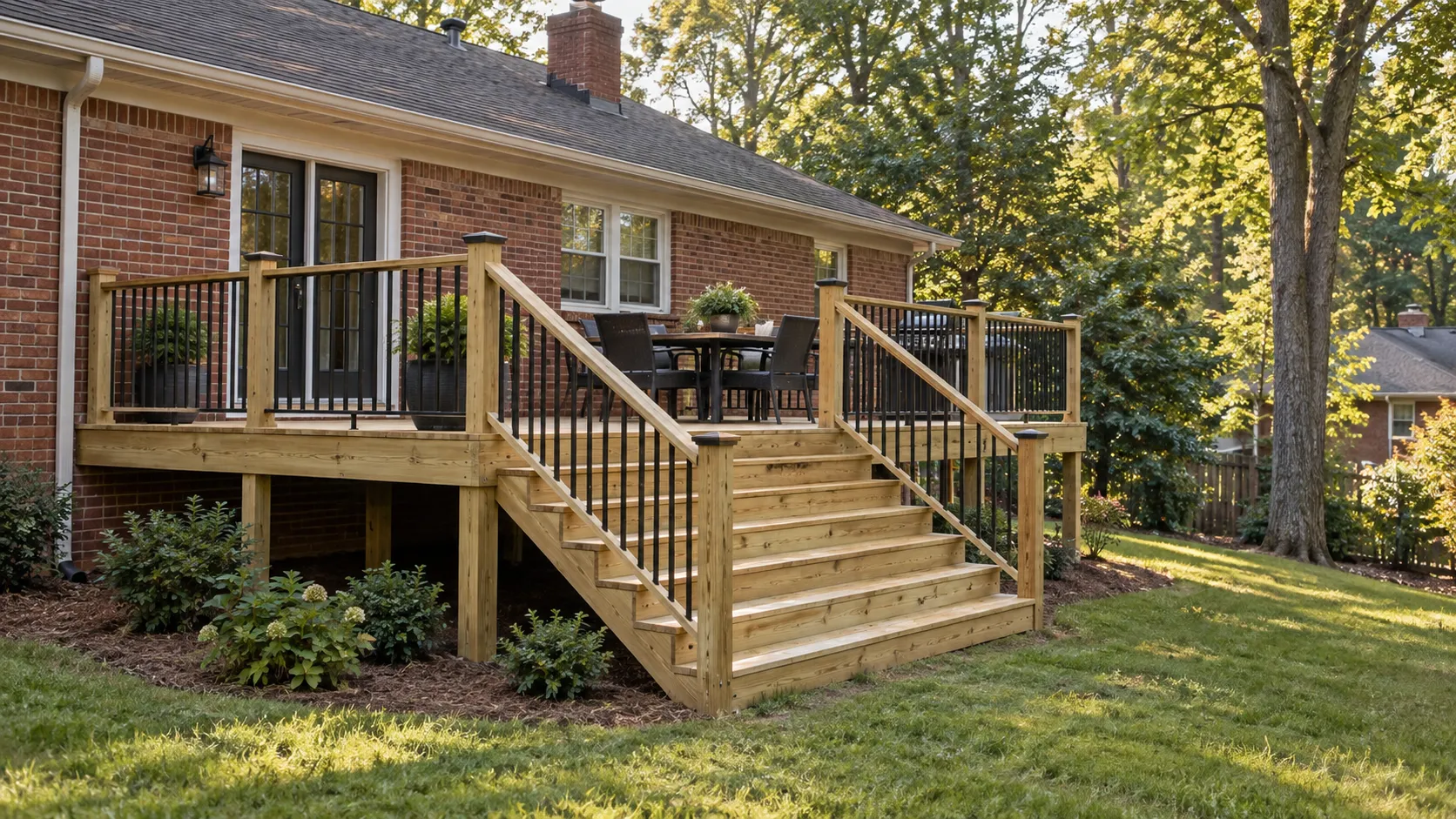
The frame is a separate decision
A walking board does not describe the entire deck. Foundations, framing, attachment, guards and stairs still need their own suitable design. For an existing deck, establish whether the retained structure can support the proposed material before comparing colors.
The actual collection matters. Product requirements can affect supports, fastening, board ends and stair details. Include those items in the installed option rather than relying on a loose-board price.
Wood and its care routine
Wood offers varied appearances and finish choices. Species, grade, treatment and intended use help specify framing and walking boards; compatible hardware belongs in the same discussion.
Cleaning, debris removal and appropriate finishing need access and suitable preparation. A shaded section and an exposed stair may weather differently, even on the same deck.
Composite and PVC choices
Composite and PVC are different material families. Each contains several products. Trex and TimberTech offer collections with different board profiles, fastening and care requirements.
Manufactured boards can reduce certain refinishing tasks. They still need appropriate cleaning, installation and condition checks, and the support beneath them may remain wood.
Use samples at your property
Look at color and texture where the deck will be used. Direct sun, shade, seating and the time of day affect comfort and appearance. Avoid universal claims that one material always stays cool or needs no care.
Compare the finished system, including rails, stairs, fascia and supporting work. That makes material options useful for a whole project rather than an isolated surface purchase.