Deck Repair in High Point, NC:Defined repairs to boards, rails, stairs & connections

High Point Deck Builders helps homeowners describe deck repair in High Point, North Carolina, from a loose railing or damaged stair to a concern about framing and the house connection.

Tell us about your deck

Required fields. No appointment booked.

A useful repair inquiry identifies the symptom and where it occurs, without assuming the visible damage tells the whole story. Walking boards, stair treads, guards, posts and connections can require different work. A worn board may be a limited surface problem, while movement across the deck can involve its support system. The assessment should explain the surrounding condition and the reason a particular repair is appropriate.

Match replacement components to the actual deck and its materials. A new guard needs suitable backing, a stair repair needs stable support, and a board change must work with the framing and fasteners. Cosmetic finishing belongs after the underlying condition has been addressed.

Keep repair separate from replacing the walking surface or rebuilding a deteriorated structure. Photographs can help describe the concern but cannot certify structural safety. Include deck height, approximate age if known, visible movement and any planned enclosure so the inquiry reflects the work that needs review.

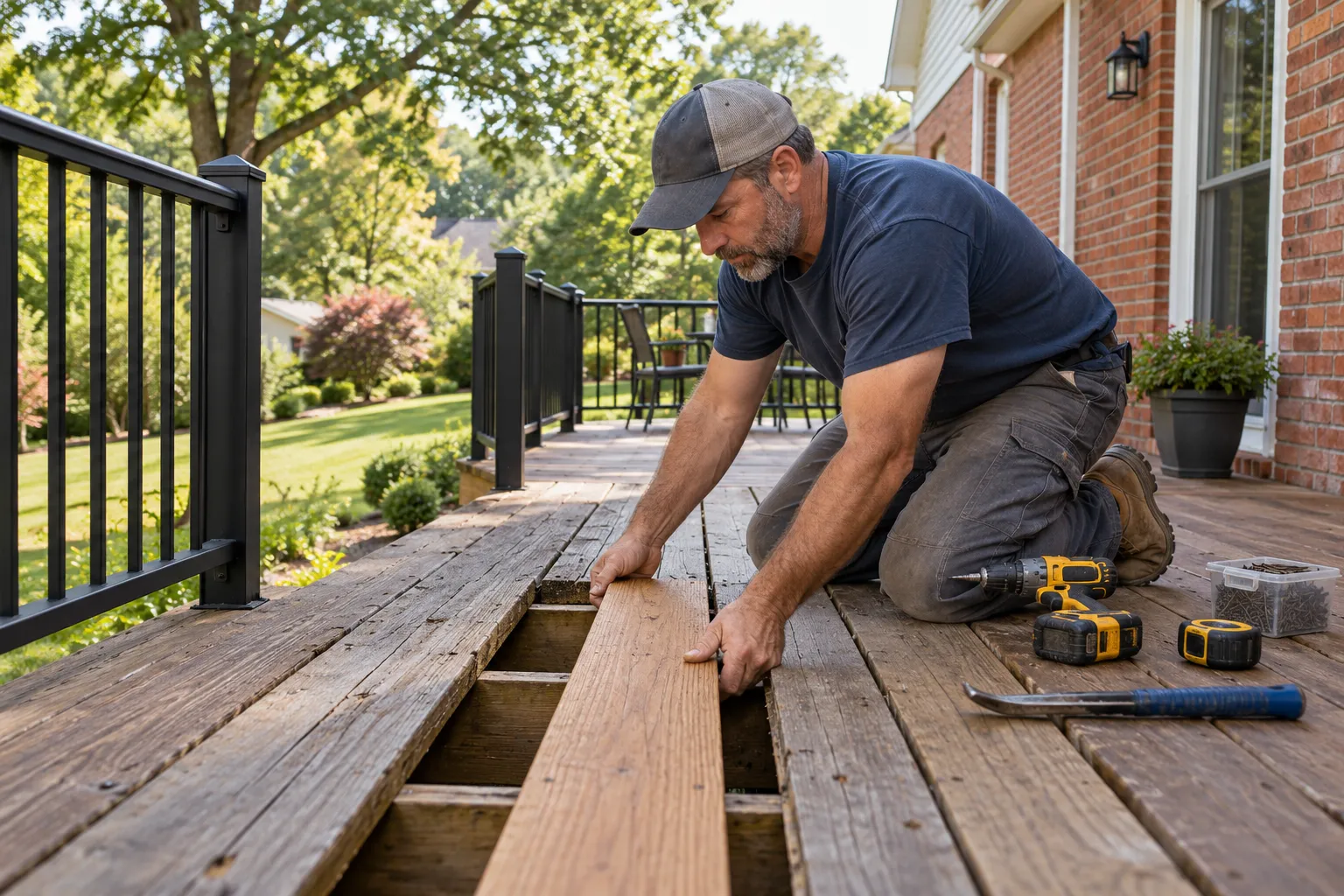
Illustrative carpenter replacing a damaged board in a wood deck

Separate a repairable component from deterioration that calls for a broader deck project.

Deck Repair services

Define the work around the condition and use of your space.

Damaged decking and localized rot

A board repair removes and replaces a defined damaged component while checking the support and adjacent area. The visible surface can hide decay at joists, ends or fastener locations. Matching board dimensions and fastening matters as much as appearance. If several areas have failed, replacing isolated boards may not resolve the overall condition. The repair scope should state where the problem stops, what supporting work is included and what further assessment is needed before the deck returns to normal use.

Loose rails and worn stairs

Railing and stair repairs need more than a tighter screw at the visible point of movement. Guard posts rely on their connections and supporting frame; stairs rely on suitable stringers, treads, landings and attachment. Deterioration beneath a connection can make a simple refastening unsuitable. Include the extent of replacement and how the new parts are supported. Appearance can follow the repair decision, but the proposal should first explain the practical reason the rail or stair moves and how that is addressed.

Framing, attachment and water entry

A structural repair begins with the affected support or connection and the condition around it. Water entering near the ledger, an aging connector or a deteriorated post may affect more than one visible location. The appropriate work depends on what the assessment finds and the design requirements. Do not hide an unresolved moisture route behind new trim or boards. A useful proposal identifies the damaged parts, necessary access and the attachment or water-management details included in the repair.

The details matter

A new finish cannot answer a structural question

Staining and cleaning can improve a suitable wood surface, but they do not restore a decayed support or correct a failed connection. Resolve the repair scope before adding finishing work, and keep any unresolved structural concern visible in the project discussion.

When damage extends beyond one component, use the repair versus replacement guide to separate a limited repair from a rebuild.

Deck Repair process

A clear scope connects the first assessment to the finished deck.

Locate the concern

Begin with the exact component, visible damage and movement reported by the homeowner.

Check the surrounding deck

Assess nearby framing and connections before deciding that a limited repair is sufficient.

Specify the replacement parts

Define material, support, fastening and access rather than an unspecified patch allowance.

Review the remaining condition

At completion, distinguish repaired components from parts excluded from the agreed scope.

What a complete proposal should cover

Deck Repair FAQs

Clear answers before the project takes shape.

Can one rotten board be replaced?

A defined board replacement may be appropriate when the surrounding deck and support are suitable. The assessment should check beneath the board as well as its surface.

When is repair less suitable than replacement?

Broad deterioration or several failing structural components can make a complete rebuild more appropriate. The decision depends on assessed condition and the proposed result.

Can photos confirm that my deck is safe?

No. Photos help describe a concern, but they cannot establish the condition of concealed components or replace an appropriate on-site assessment.

What could your deck become?

Start with your property. Define the work you need.